Wednesday, April 26, 2017
Who are you, Human?
The way we answer this question will determine the purpose and meaning of our lives. Although it seems the answer is simple, the problem of modern humans is that they do not fully realize what humans constitute. We’ll try to answer this fundamental question of existence, based on the ancient wisdom of the Vedas. The ancient scriptures on earth – the Vedas say, that the human is composed of three main structures: the physical body, subtle body, or the mind, and the soul, which is the source of consciousness....


The Cosmic Laws Of Harmony
Start Exploring The Mystery Of Human Life and Unknown Invisible Laws Of Nature That Drastically Shape Your Destiny by Watching This Film by Bhaktivedanta Institute and ISKCON Cinema.
Monday, March 6, 2017
Tulasi Worship
 Tulasi is worshiped with mantras that are spoken directly to Tulasi Devi.
The three mantras for Tulasi Devi are as follows:
The first mantra is for offering obeisances, bowing down (pancanga pranam):
vrindaai tulasi devyai priyaai kesavasya ca,
visnubhaktiprade devi satyavatyai namo namah
When collecting leaves from the plant, the following mantra should be chanted:
tulasya mrta janmasi, sada tvam kesavapriya,
kesavarthi cinomi tvam, barada bhava sobhine
The mantra for circumambulating the Tulasi tree:
yani kani ca papani brahma hatya dikani ca,
tani tani pranasyanti pradaksinah pade pade
So there are three mantras, one for bowing down, one for circumambulating, and one for collecting the leaves. The collecting of leaves should be done once in the morning for worshiping and for putting on the plates of foodstuff to be offered. On each bowl or plate there should be at least one leaf.

To worship Tulasi devi, one sings this prayer:
namo namah tulasi krsna-preyasi namo namah
radha-krsna-seva pabo ei abilasi
ye tomara sarana loy, tara vancha purna hoy
krpa kori' koro tare vrndavana-vasi
mora ei abhilasa, vilasa kunje dio vasa
nayana heribo sada yugala-rupa-rasi
ei nivedana dhara, sakhira anugata koro
seva-adhikara diye koro nija dasi
dina krsna-dase koy, ei yena mora hoy
sri-radha-govinda-preme sada yena bhasi
1) O Tulasi, beloved of Krsna, I bow before you again and again. My desire is to obtain the service of Sri Sri Radha and Krsna.
2) Whoever takes shelter of you has his wishes fulfilled. Bestowing your mercy on him, you make him a resident of Vrndavana.
3) My desire is that you will also give me a residence in the pleasure groves of Sri Vrndavana-dhama. Thus within my vision I will always behold the beautiful pastimes of Radha and Krsna.
4) I beg you to make me a follower of the cowherd damsels of Vraja. Please give me the privilege of devotional service and make me your own maidservant.
5) This very fallen and lowly servant of Krsna prays, "May I always swim in the love of Sri Sri Radha and Govinda."
Wednesday, June 23, 2010
Physical Beauty
One’s bodily luster and beauty, one’s constitution, one’s activities and one’s qualities all depend on the law of cause and effect.
The material beauty of a person is an illusion because actually the body is made of earth, water, fire, air, etc. But because there is the association of the living spark with matter, it appears to be beautiful. No one is attracted by an earthen doll, even if it is most perfectly prepared to attract the attention of others. The dead body has no beauty because no one will accept the dead body of a so-called beautiful woman. Therefore, the conclusion is that the spirit spark is beautiful, and because of the soul’s beauty one is attracted by the beauty of the outward body. The Vedic wisdom, therefore, forbids us to be attracted by false beauty.
Fatness, thinness, bodily and mental distress, thirst, hunger, fear, disagreement, desires for material happiness, old age, sleep, attachment for material possessions, anger, lamentation, illusion and identification of the body with the self are all transformations of the material covering of the spirit soul. A person absorbed in the material bodily conception is affected by these things.
.
.
.
.
Tuesday, June 22, 2010
Material Body
This body is given according to one’s past desires. To fulfill desires, one is given the body, with which he acts accordingly. Practically speaking, the body is a machine, designed by the Supreme Lord, to fulfill desires. Because of desires, one is put into difficult circumstances to suffer or to enjoy. This transcendental vision of the living entity, when developed, makes one separate from bodily activities. One who has such a vision is an actual seer.
Therefore the living entity must accept a particular type of body awarded to him by maya, the material energy, according to his karma. One cannot independently say, “Give me a body like this” or “Give me a body like that.” One must accept whatever body is offered by the material energy. This is the position of the ordinary living being.
Yet the body is temporary, and only foolish, materialistic persons, who do not have full knowledge of the soul, regard the temporary body as reality and engage in decorating this body. Both of these pitfalls—rejection of the body as false and acceptance of the body as all in all—can be avoided when one is fully situated in Krishna consciousness.
Therefore the living entity must accept a particular type of body awarded to him by maya, the material energy, according to his karma. One cannot independently say, “Give me a body like this” or “Give me a body like that.” One must accept whatever body is offered by the material energy. This is the position of the ordinary living being.
Yet the body is temporary, and only foolish, materialistic persons, who do not have full knowledge of the soul, regard the temporary body as reality and engage in decorating this body. Both of these pitfalls—rejection of the body as false and acceptance of the body as all in all—can be avoided when one is fully situated in Krishna consciousness.
As one changes an old garment, so the individual living being also changes his body, and this change of body is called death. Death is therefore a process of changing the body at the end of the duration of the present life. An intelligent person must be prepared for this and must try to have the best type of body in the next life. The best type of body is a spiritual body
Monday, June 21, 2010
Absolute Power, Absolute Corruption
A serpent with a jewel on its hood is as dangerous as a serpent without such a jewel. Durvasa Muni was a very learned brahmana equipped with mystic power, but because he was not a gentleman, he did not know how to use his power. He was therefore extremely dangerous. The Supreme Personality of Godhead is never inclined toward a dangerous person who uses his mystic power for some personal design. By the laws of nature, therefore, such misuse of power is ultimately dangerous not for society but for the person who misuses it.
Srimad Bhagavatam 9.4.70
Sunday, June 20, 2010
Heaven Vs Original Spiritual World?
Usually the concept in religious books of different religions is that heaven is a place where there is a lot of enjoyment. Quran talks about the various types of sense gratification you can enjoy. The Mormons consider heaven to be a place to get back together with your family and then live there forever after. Family members are happy and there is no suffering and everyone is basically God conscious.
 But this concept of heaven fits in with the upper planetary systems in the (material) universe, where people are pious entities who follow the laws of God, and they have good material sense gratification.
But according to the Vedas, one doesn't stay there eternally. One comes down from there, from those planets and is forced to maybe take birth in the human form of life or as an animal, according to their Karmas. One can be on the heavenly planets for thousands or millions of years of our calculation, so one thinks one is there for a very long time but in terms of eternal time it's a drop in the bucket, so to speak. It's just a small period of time, which quickly passes by.
 So, the real goal of life is to go back to Godhead, back to the original Spiritual Kingdom of God. But in the Spiritual Kingdom of God, there is no material sense gratification. Everything is in relationship to the service of the Lord.
That means, as long as one is thinking about their personal sense gratification, as long as that is their goal of life, namely how to make their own bodies happy, they are forced to come again in the material world.
Taking Shelter of Krishna
Posted by:
Gandharvika dd. ISV
.
Friday, August 15, 2008
Varuni Beverage for Lord Balaram
 Small amount:
7 litres Milk
6 litres Yogurt
1 litre Cream
5 kg Runny Honey
1 kg White Sugar
1/2 bottle Rose water (7 Roses brand is very nice from Mumbai - 7oz)
Larger amount:
25 litres Milk
15 litres Yogurt
3 litres Cream
10 kg Runny Honey
3 kg White Sugar
1 bottle Rose Water
Wednesday, July 30, 2008
Sachimata's Recipes - Vegetarian Pizza

Ingredients:
Crust:
2 ounces package active dry yeast
1 1/2 teaspoon sugar
1 cup warm water (100-110 deg. F)
3 cups white flour
Pizza Toppings:
1 ounce dry basil
5 tablespoons olive oil
1/2 cup pitted olives
1 cup grated Cheddar cheese
2 cup crumbled Mozarella cheese
1 cup diced red bell pepper
1 cup diced seeded tomatoes
3 tomatoes sliced
1 zucchini sliced
1/4 broccoli chopped
Directions
1.- Mix water, yeast and sugar and let stand 10 minutes to start bubbling.
2.- Add flour to yeast mix and blend well.
3.- Place in a greased or oiled bowl, and cover with a warm damp cloth.
4.- Allow to rise in a warm place until double in bulk, around 1 hour.
5.- Punch down dough and pat out onto an oiled (or cornmeal dusted) pizza pan to form the crust.
6.- Bake in a preheated 450° F oven for 8 minutes.
7.- Place olive oil, 1 cup diced seeded tomatoes, salt in blender and process until smooth.
8.- Spread mixture onto baked pizza crust evenly.
9.- Add 3 tomatoes sliced, 1/2 cup pitted olives, 1 cup grated cheddar cheese, 2 cup crumbled mozarella cheese, 1 cup diced green bell pepper, 1 zucchini sliced, 1/4 broccoli chopped . Sprinkle with salt and pepper dry basil and bake at 360° for 10 minutes. Bake until pizza is heated through and cheeses melt, about 10 minutes. Cut into squares.
Offering to Krishna.
More recipies...
.
2.- Add flour to yeast mix and blend well.
3.- Place in a greased or oiled bowl, and cover with a warm damp cloth.
4.- Allow to rise in a warm place until double in bulk, around 1 hour.
5.- Punch down dough and pat out onto an oiled (or cornmeal dusted) pizza pan to form the crust.
6.- Bake in a preheated 450° F oven for 8 minutes.
7.- Place olive oil, 1 cup diced seeded tomatoes, salt in blender and process until smooth.
8.- Spread mixture onto baked pizza crust evenly.
9.- Add 3 tomatoes sliced, 1/2 cup pitted olives, 1 cup grated cheddar cheese, 2 cup crumbled mozarella cheese, 1 cup diced green bell pepper, 1 zucchini sliced, 1/4 broccoli chopped . Sprinkle with salt and pepper dry basil and bake at 360° for 10 minutes. Bake until pizza is heated through and cheeses melt, about 10 minutes. Cut into squares.
Offering to Krishna.
More recipies...
.
Wednesday, June 4, 2008
Cologne Ratha Yatra
Please accept my humble obeissances. All glories to Srila Prabhupada! Please see attached the invitation and announcement to our annual Ratha Yatra in Cologne/Germany.

.
Wish you all a happy KC day.
Cleveland Ratha-Yatra
ISKCON Cleveland wishes to invite you to our annual Ratha-yatra celebration! This year's festival of the chariots will take place on Saturday, June 7 at Edgewater Park in Cleveland from 11am until 6pm. Come join us for bhajans, a vegetarian feast, and the chariot parade! As always, Ratha-yatra is free and open to the public! Please contact Dayal-Nitai dasa at 440-895-1005 or donfoose@hotmail.com for more information! Hare Krsna!

.

.
Tuesday, March 4, 2008
Dukka
Fran from Redland Bay in Queensland, Australia writes:
“Hey Kurma, where have you been? I read your blog every day and missed your stuff. Anyway, tell me, do you have a recipe for Dukkah?
My reply: Thanks for asking. Things have been busy here on the home front, but nothing earth-shatteringly bloggable, although I did prepare a stunning batch of lime marmalade this morning.
Here’s the recipe (not for the marmalade):
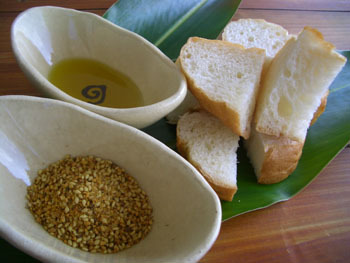
Egyptian Crumbly Spice & Nut Dip (Dukkah)
Dukkah is a loose, coarsely-ground mixture of sesame seeds, hazelnuts and aromatic cumin and coriander. It is delicious eaten on oil-dunked bread for breakfast, or as a snack. It has of late started appearing quite regularly on restaurant menus as an appetizer, hence its inclusion in this chapter.
Variants of dukkah are found all over the Middle East, and this version is from Egypt. It is a very personal and individual mixture that varies from one family to another; hence no two versions are exactly the same.
The important thing to remember about dukkah is that it should be dry and crumbly. It is easy to over-grind the ingredients, especially the nuts, which makes the mixture too oily. To prevent this, cool the ingredients after roasting, then proceed slowly. Makes about 2½ cups.
½ cup hazelnuts ¾ cup sesame seeds ½ cup coriander seeds ½ cup cumin seeds 1 teaspoon salt ½ teaspoon pepper olive oil and crusty bread for serving
Preheat the oven to 180? C / 350° F.
Roast the hazelnuts on an oven tray for about 15 minutes, or until fragrant. Remove them from the oven, and when a little cool, rub away as much of the brown skin from the nuts as you can.
Toast the sesame seeds in a heavy frying pan over moderate heat, stirring often, for about 4 minutes, or until golden brown and aromatic. Empty the toasted seeds into a bowl. Toast the coriander seeds in a similar manner for about 2-3 minutes. Repeat for the cumin, toasting for about 2 minutes.
Pound the seeds and nuts using a mortar and pestle, or whiz them in a spice or coffee grinder. The mixture should be dry and crumbly, not oily. Combine the crushed nuts and seeds with the salt and pepper.
Serve as a dip with olive oil and crusty bread.
Note: The mixture will keep in a sealed container for many weeks.
Monday, December 17, 2007
Non-grain Flours
Over the last few months I've received quite a few letters about non-grain flours, and specifically what to cook on grain-free fasting days. This topic has come up before, and I know I have a posting for it somewhere in my archives. But there's no harm in re-presenting.
Here's my list of non-grain flours, some you may not have encountered.
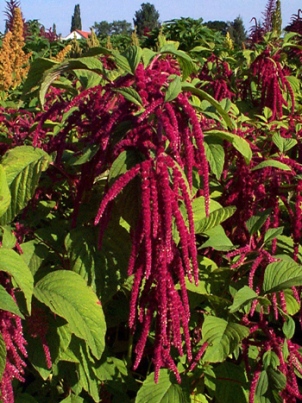 Amaranth flour: Milled from the seeds of the amaranth plant, this flour boasts a higher percentage of protein than most other grains, and has more fibre than wheat and rice. It is also higher in the amino acid lysine, which some food scientists believe makes it a more complete protein than flour made from other grains. Amaranth flour can be used in cookies, crackers, baking mixes, and cereals.
Arrowroot flour: The rootstalks of a tropical plant are the source of this flour, often used as a thickener for sauces and desserts; the finely powdered arrowroot turns completely clear when dissolved (giving gloss to sauces), and adds no starchy flavor. Because of its easy digestibility, it is also an used as an ingredient in cookies intended for infants and young children. I use it as a grain-free substitute to corn flour (cornstarch for all US readers).
Buckwheat flour: A common ingredient in pancake mixes, buckwheat flour is also used to make Japanese soba noodles. It is available in light, medium, and dark varieties (the dark flour boasts the strongest flavor), depending on the kind of buckwheat it is milled from. You can make your own buckwheat flour by processing whole white buckwheat groats in a blender or food processor.
Chestnut flour: This tan flour is made from chestnuts, the meaty, lowfat nuts that are often served as a vegetable. The flour is a little sweet and is traditionally used in Italian holiday desserts. Italian shops sell it.
Potato flour (potato starch): Steamed potatoes are dried and then ground to a powder to make this gluten-free flour, which is commonly used in baked goods for Jewish Passover (when wheat flour may not be used).
Quinoa flour: Higher in fat than wheat flour, quinoa flour makes baked goods more moist. You can make your own quinoa flour by processing whole quinoa in a blender; stop before the flour is too fine - it should be slightly coarse, like cornmeal.
Tapioca flour: Milled from the dried starch of the cassava root, this flour thickens when heated with water and is often used to give body to puddings, fruit pie fillings, and soups. It can also be used in baking.
Water-chestnut flour (water-chestnut powder): This Asian ingredient is a fine, powdery starch that is used to thicken sauces (it can be substituted for cornstarch) and to coat foods before frying to give them a delicate, crisp coating.
I am sure this is not a complete list. I also encountered flatbreads made from banana flour whilst in India. If anyone has any more to add to this list, let me know.
.
Here's my list of non-grain flours, some you may not have encountered.
Amaranth flour: Milled from the seeds of the amaranth plant, this flour boasts a higher percentage of protein than most other grains, and has more fibre than wheat and rice. It is also higher in the amino acid lysine, which some food scientists believe makes it a more complete protein than flour made from other grains. Amaranth flour can be used in cookies, crackers, baking mixes, and cereals.Arrowroot flour: The rootstalks of a tropical plant are the source of this flour, often used as a thickener for sauces and desserts; the finely powdered arrowroot turns completely clear when dissolved (giving gloss to sauces), and adds no starchy flavor. Because of its easy digestibility, it is also an used as an ingredient in cookies intended for infants and young children. I use it as a grain-free substitute to corn flour (cornstarch for all US readers).
Buckwheat flour: A common ingredient in pancake mixes, buckwheat flour is also used to make Japanese soba noodles. It is available in light, medium, and dark varieties (the dark flour boasts the strongest flavor), depending on the kind of buckwheat it is milled from. You can make your own buckwheat flour by processing whole white buckwheat groats in a blender or food processor.
Chestnut flour: This tan flour is made from chestnuts, the meaty, lowfat nuts that are often served as a vegetable. The flour is a little sweet and is traditionally used in Italian holiday desserts. Italian shops sell it.
Potato flour (potato starch): Steamed potatoes are dried and then ground to a powder to make this gluten-free flour, which is commonly used in baked goods for Jewish Passover (when wheat flour may not be used).
Quinoa flour: Higher in fat than wheat flour, quinoa flour makes baked goods more moist. You can make your own quinoa flour by processing whole quinoa in a blender; stop before the flour is too fine - it should be slightly coarse, like cornmeal.
Tapioca flour: Milled from the dried starch of the cassava root, this flour thickens when heated with water and is often used to give body to puddings, fruit pie fillings, and soups. It can also be used in baking.
Water-chestnut flour (water-chestnut powder): This Asian ingredient is a fine, powdery starch that is used to thicken sauces (it can be substituted for cornstarch) and to coat foods before frying to give them a delicate, crisp coating.
I am sure this is not a complete list. I also encountered flatbreads made from banana flour whilst in India. If anyone has any more to add to this list, let me know.
.
What did ISKCON ever do for us?
From time to time I'm confronted with this question by devotees who've been hurt with their experience in ISKCON. I'm not minimising the need for growth and maturity - not at all. Because the individuals involved are not perfect and still subject to the influence of the modes of material nature some unsavory stuff happens as do all of the seeming injustices in the material world. Still I think its healthy to be grateful for the good things that have come our way and give credit where its due. The victim mentality is a dead end.
Yet there are some devotees who refuse to admit that ISKCON has ever helped them in their lives and tend to only focus on the negative issues. Whenever I end up in a conversation with such a person I think of this clip from a film (paid for in part by George Harrison) - enjoy!
Source... Yet there are some devotees who refuse to admit that ISKCON has ever helped them in their lives and tend to only focus on the negative issues. Whenever I end up in a conversation with such a person I think of this clip from a film (paid for in part by George Harrison) - enjoy!
.
Monday, December 10, 2007
Subscribe to:
Posts (Atom)
.jpg)
.jpg)
.jpg)

